gusseisenpfannen

Cast iron pans

Using and Caring for Cast Iron Properly

Cast iron cookware is a reliable kitchen companion - durable, timeless, and made for many years of enjoyment. But what makes cast iron so special? Why is it worth the investment? In the Fissler guide, you’ll learn everything about the proper use, care, and versatile benefits of cast iron pans, pots, and roasters.

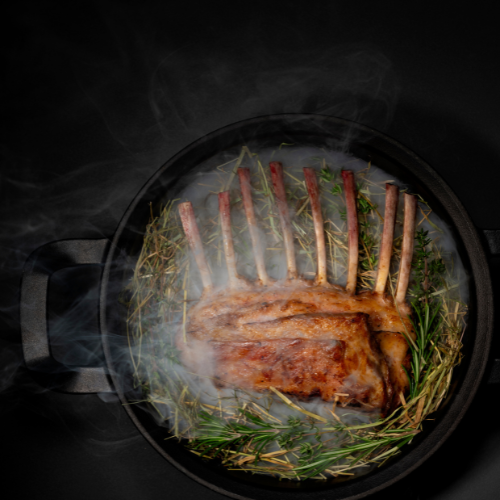
A perfectly cooked rack of lamb rests on fresh herbs in a premium cast-iron Frying Pan by Fissler, with smoke swirling against a dark background.

History and origin of cast iron cookware

The roots of cast iron go back more than 2,500 years—to ancient China in the 6th century BC. From there, the material conquered the world and became an essential part of culinary culture. While robust tools and pots were forged from it in the Middle Ages, French manufacturers introduced the famous cocottes in the 19th century. Today, cast iron is a symbol of quality and enjoyment, and thanks to its many advantages, it is experiencing a renaissance.

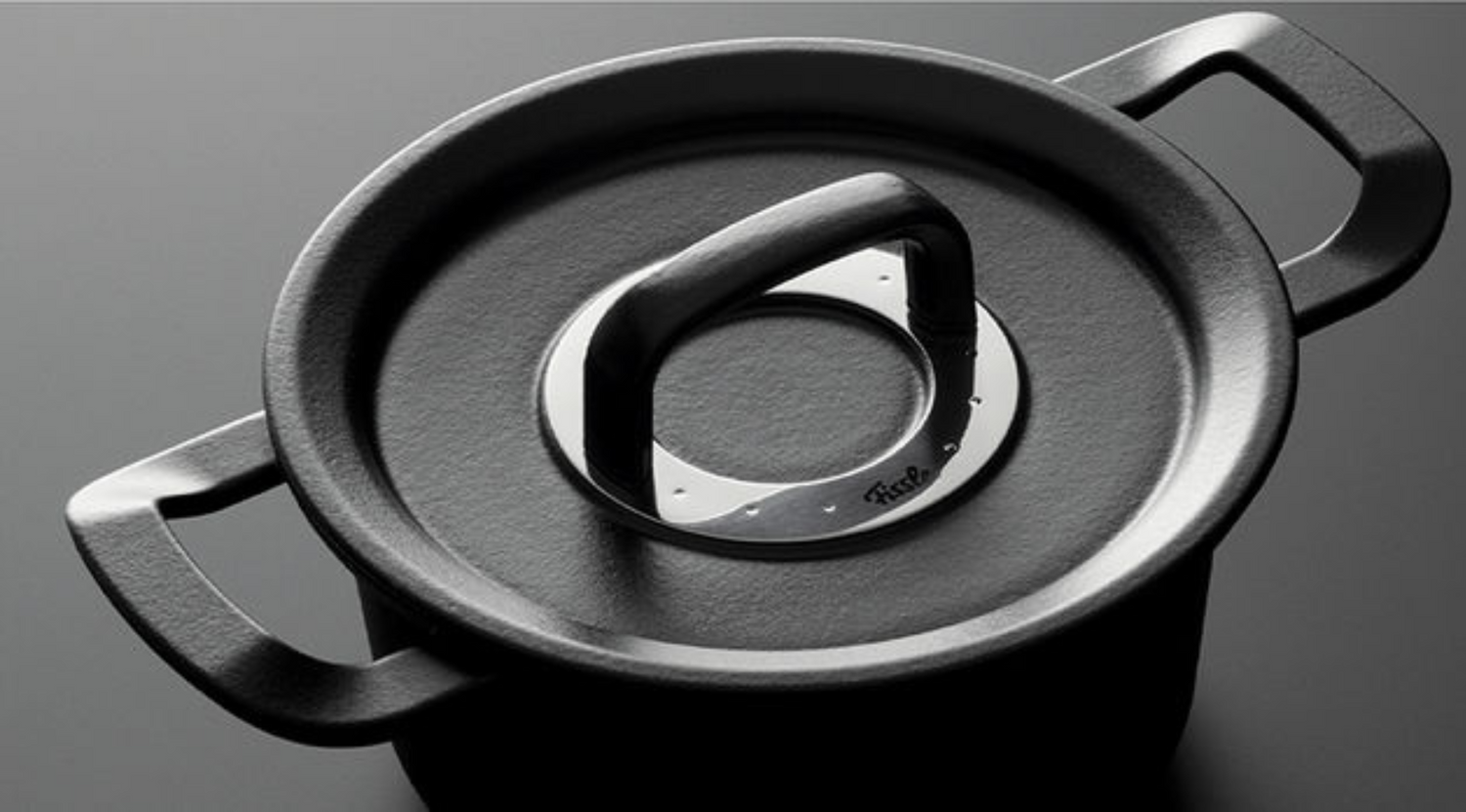
A high-quality Fissler cast iron pot with lid and two handles, presented in dramatic lighting, reflecting timeless German design.

What is cast iron made of?

Cast iron cookware, such as a cast iron roaster, is made from an alloy consisting mainly of pure iron and carbon .

Depending on the manufacturer and intended use, other metals such as silicon or chromium can also be added to positively influence the properties of the cast iron. Typically, a mixture of approximately 95% pig iron, about 3% carbon, and approximately 2% other components is melted at temperatures up to 1,700 °C and further processed or cast in its liquid form.

Section ID: template--30741712077149__multi_column_Gbd4e3

The advantages of cast iron at a glance

There are good reasons why heavy cast iron, as an alloy of pure iron and carbon, is preferably produced for cookware.
These are the most important arguments:

1. Heat storage and heat resistance

The material composition of cast iron provides optimal heat retention. Although the material takes a little longer to heat up than, for example, aluminum or copper, cast iron retains heat especially well for a long time and with high intensity.

2. Even heat distribution

In cast iron roasters and pans, the heat is distributed slowly and evenly over the entire surface, ensuring that the food is cooked evenly.

3. Patina – a natural non-stick effect

When properly prepared, cared for, and used, cast iron cookware develops a non-stick coating over time, known as a patina. This prevents food from sticking and makes cleaning easier. The patina also lets you use less fat when cooking and enhances the flavor of your food.

4. Reliability

Cast iron cookware is not only extremely reliable, but also versatile. With proper care, it will remain a trusted companion for many years and even improve with regular use. It is heat-resistant and requires no chemical coatings.

Enameled or unenameled cast iron: Which is better?

The choice between enamelled and non-enameled cast iron depends on your personal preferences.

Enameled cast iron

Enameled cast iron has a protective layer of enamel made of glass. The enamel helps protect against corrosion and lets you cook acidic foods such as apples or tomatoes without affecting the taste.

Unenameled cast iron

Unenamelled cast iron pots and pans do not have a protective glass coating. This means the raw cast iron can react with acidic foods and give the food a slight iron taste.

Rust protection is not present from the start. It is built up by seasoning the uncoated pots and pans.

Finding the right model for your cooking habits

Whether a cast iron pan should be enamelled depends on your preferences. For grilling over an open flame, unenameled cast iron is ideal, as it withstands direct contact with fire well. On a grill, the heat can be concentrated in one spot, which can lead to uneven heating of enamelled cast iron and cause the enamel to chip.

Section ID: template--30741712077149__multi_column_6Waikk

Step-by-step instructions: Cleaning enamelled cast iron

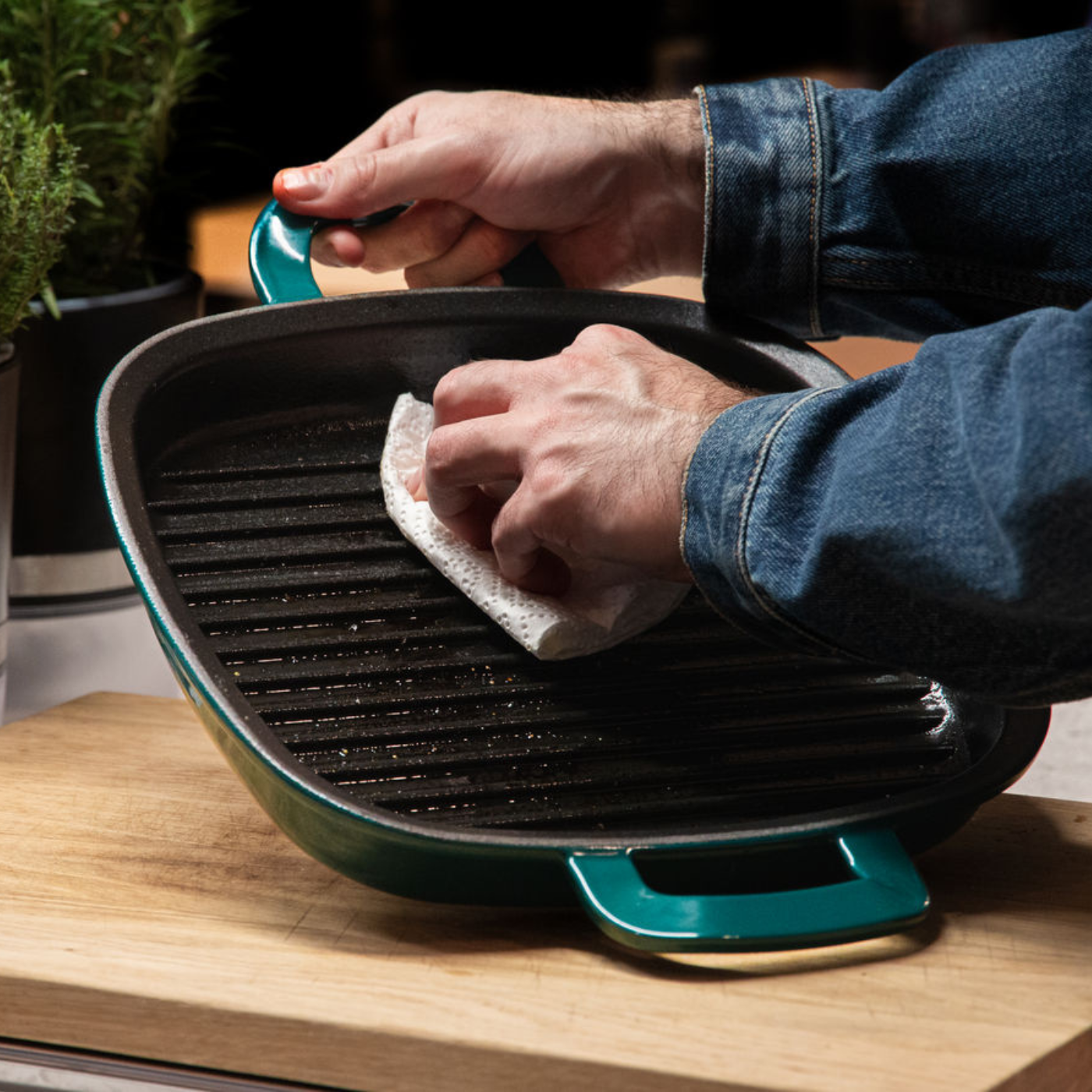
A person in a denim jacket cleans a high-quality cast iron grill pan on wood, with Fissler's quality and timeless German design nearby.

1. Cleaning:

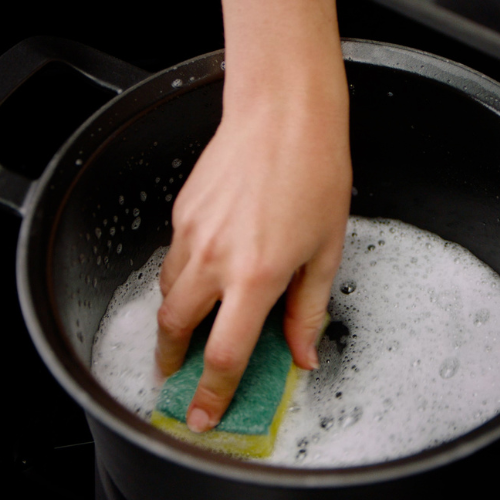
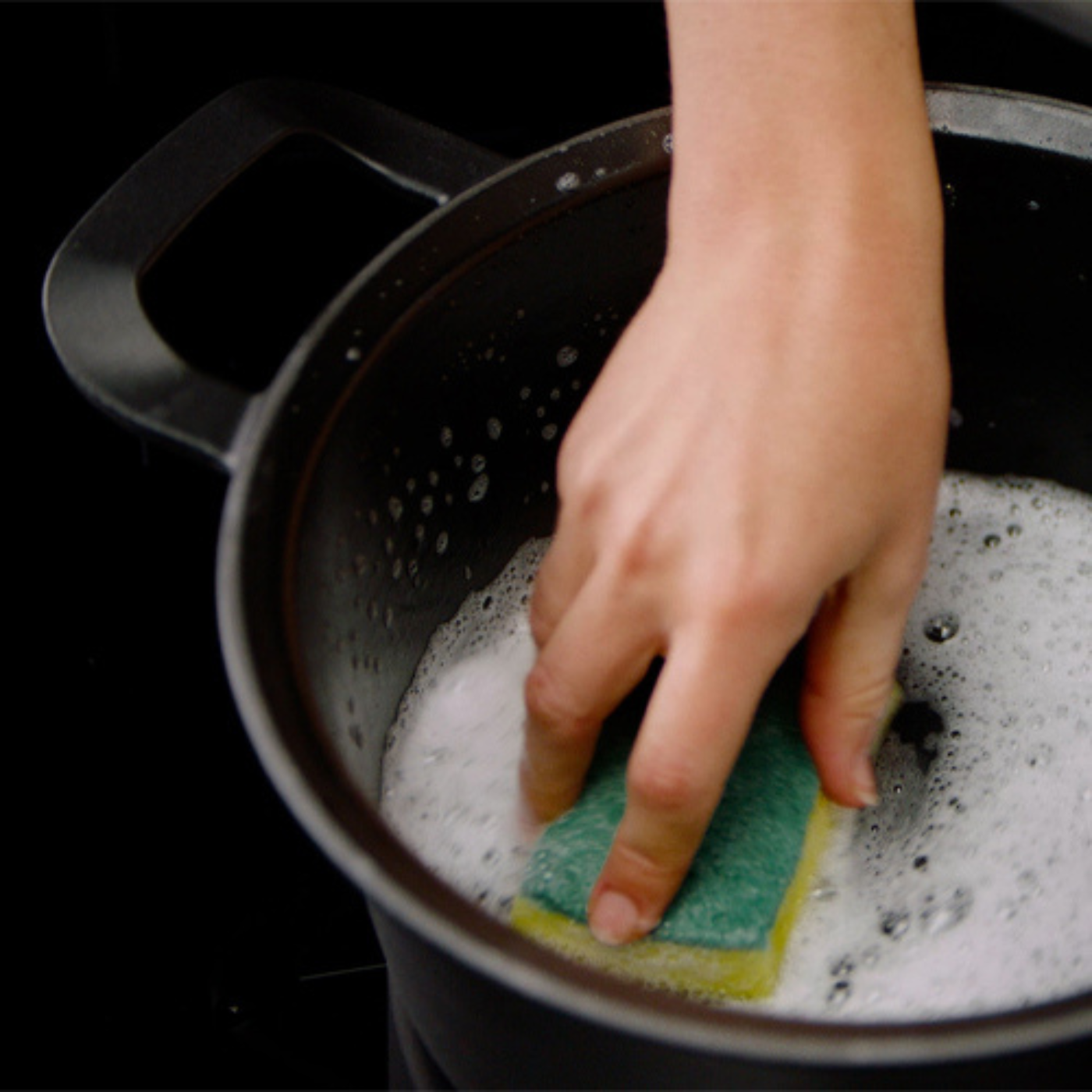
Use hot water, mild dish soap and non-scratch dishwashing utensils such as a dishcloth or sponge for cleaning.

A hand cleans a high-quality black Fissler pot with a green and yellow sponge, highlighting the durability and precision of German manufacturing.

2. Remove residues:

For encrustations or stubborn stains, soak the cookware first instead of using metal sponges or abrasive cleaners.

Fissler glass bottles with golden oil, silver caps, neatly arranged; peppercorns and salt crystals emphasize a refined German design.

3. Oiling:

After each cleaning, lightly wipe the cookware with a cloth moistened with cooking oil to renew the protective layer.

A person places a cloth into a high-quality black Fissler pot, crafted with precision on a smooth dark surface and dark background.

4. Drying:

To prevent corrosion or surface rust, always allow cookware to dry thoroughly after cleaning. Place the lid – slightly ajar – on the completely dry roasting pan only to allow any residual moisture to escape.

Section ID: template--30741712077149__multi_column_igf9pC

Step-by-step instructions: Cleaning unenameled cast iron:

A hand cleans a high-quality black Fissler pot with a green and yellow sponge, highlighting the durability and precision of German manufacturing.

1. Cleaning:

Clean with warm water and a brush or sponge after each use. Avoid using dish soap.

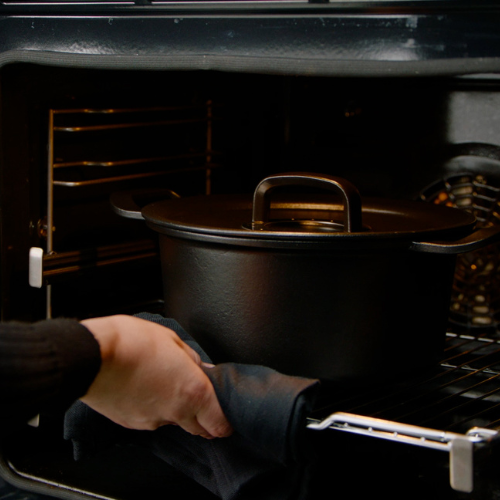
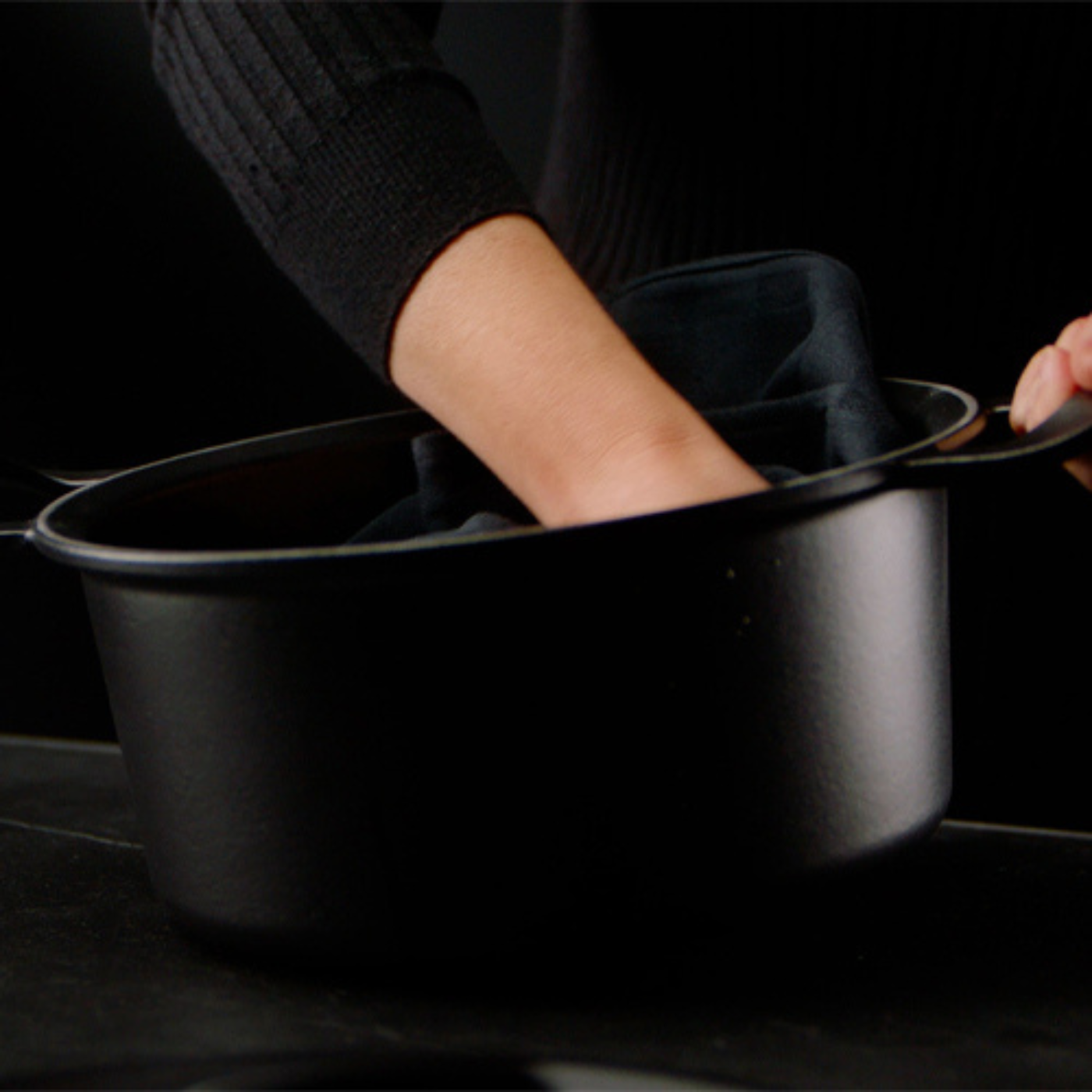
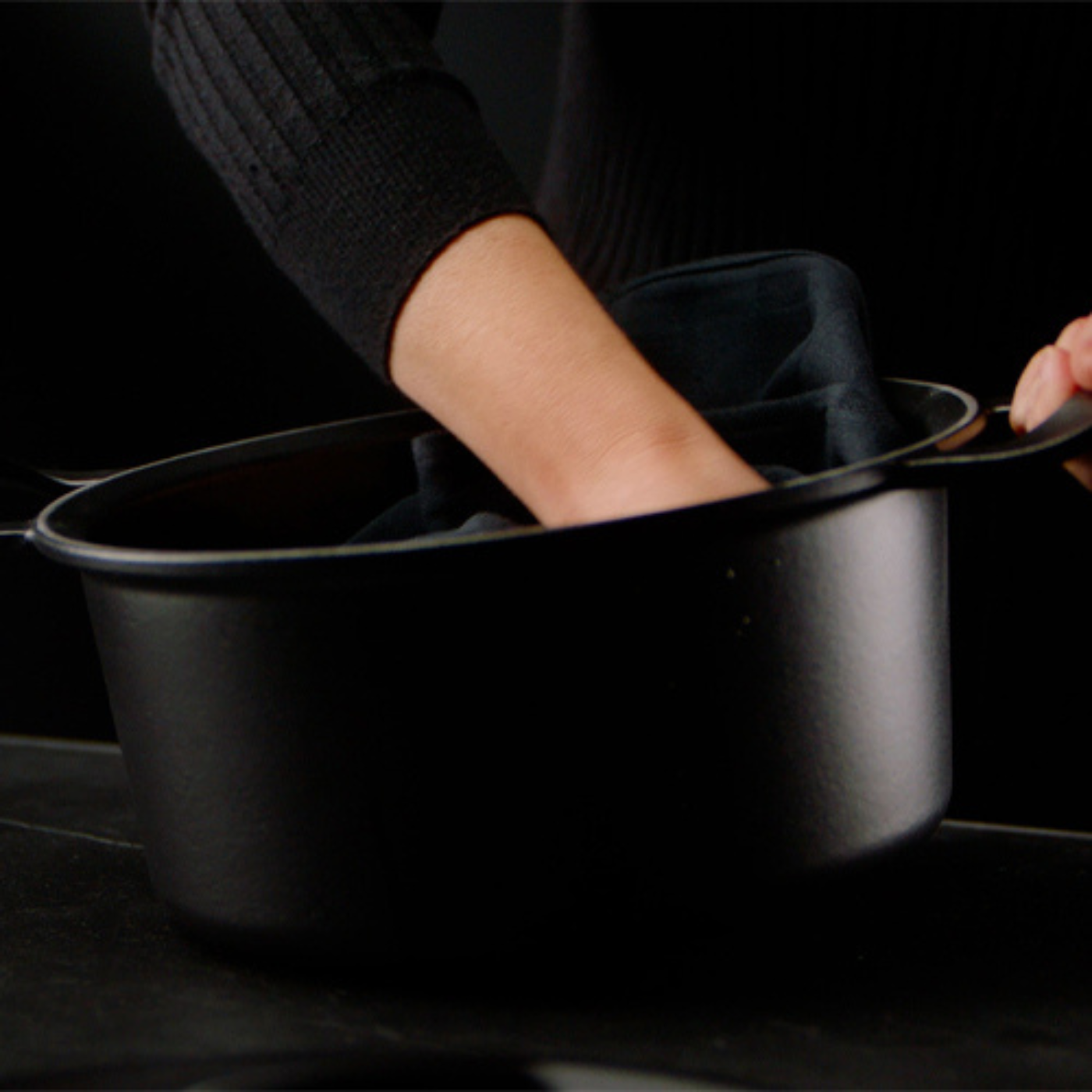
A person in a black sweater places a hand into a black Fissler pot holding a dark cloth, in front of an elegant black background.

2. Drying:

Dry thoroughly to prevent rust.

Fissler glass bottles with golden oil, silver caps, neatly arranged; peppercorns and salt crystals emphasize a refined German design.

3. Oiling:

Apply a thin layer of vegetable oil to protect the cast iron and preserve the patina.

What can I cook in cast iron?

Cast iron cookware is particularly well-suited for dishes that require gentle cooking or braising over extended periods due to its excellent heat distribution and retention. It is also ideal for use at high temperatures, such as for searing or deep-frying.

Examples:

  • Stews and soups
  • Braised dishes, such as goulash or
  • Beef ragout
  • Roasts and pot roasts
  • Roasted poultry dishes
  • Chili con Carne
  • Fish dishes, such as salmon or trout
  • Bread

How to properly season cast iron

Unlike stainless steel pots and pans, raw cast iron cookware doesn't come with a non-stick coating. To prevent food from sticking and to protect the iron from rusting, it needs to be seasoned before first use.

Section ID: template--30741712077149__multi_column_CTta7A

Step-by-step instructions: Seasoning cast iron

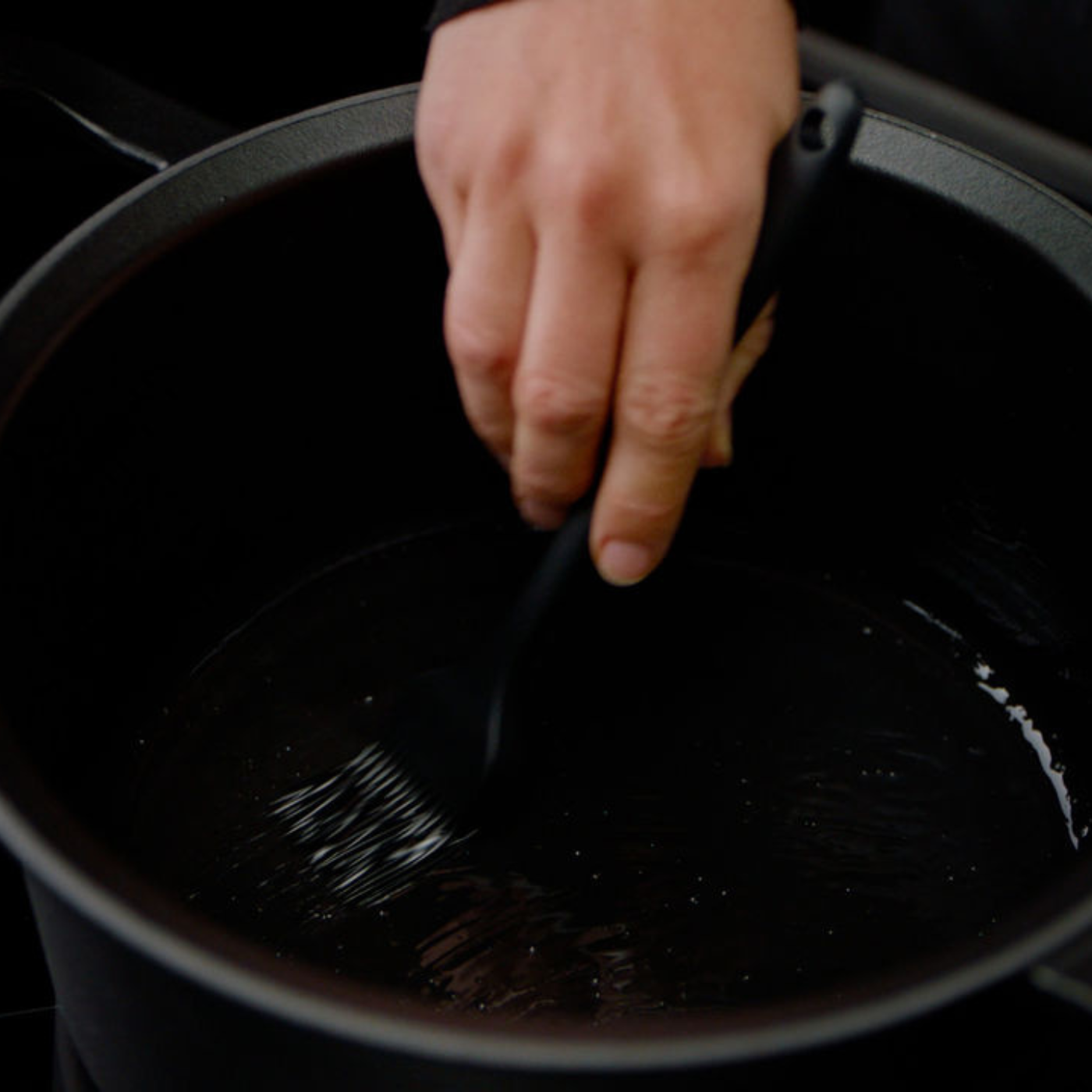
A hand uses a Fissler brush to apply oil in a high-quality black Fissler pot, preparing the durable cookware for precision cooking.

Step 1:

Rub the inside and upper edge, especially the cooking surface of the cast iron cookware, with one to two tablespoons of heat-resistant oil, e.g. refined rapeseed or sunflower oil.

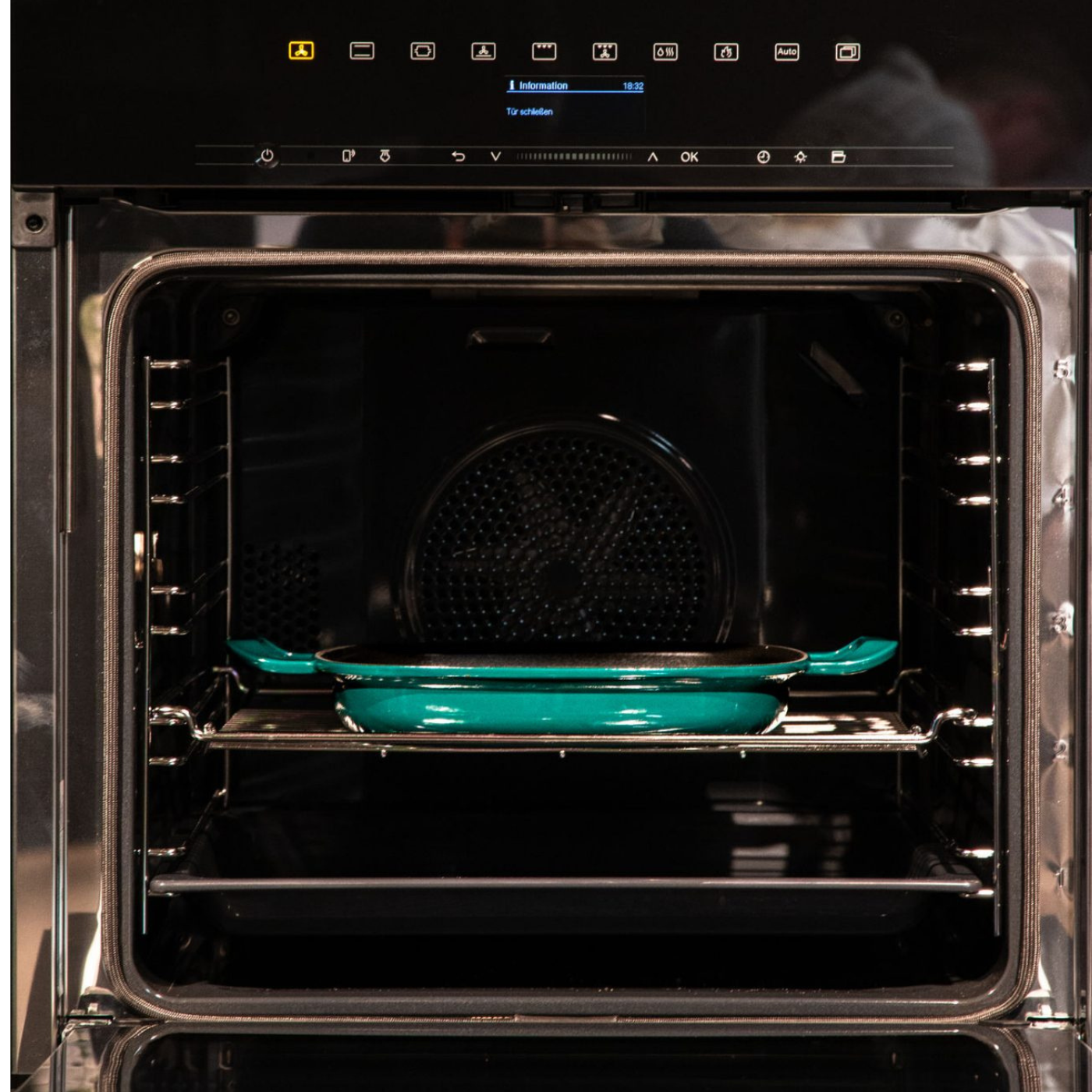
A high-quality teal Fissler baking pan, characterized by its durability and timeless design, rests in an oven beneath a digital control panel.

Step 2:

Place the cookware on the stovetop or in the oven. Then gradually increase the temperature to approximately 200°C until the fat begins to smoke. This may take a few minutes.

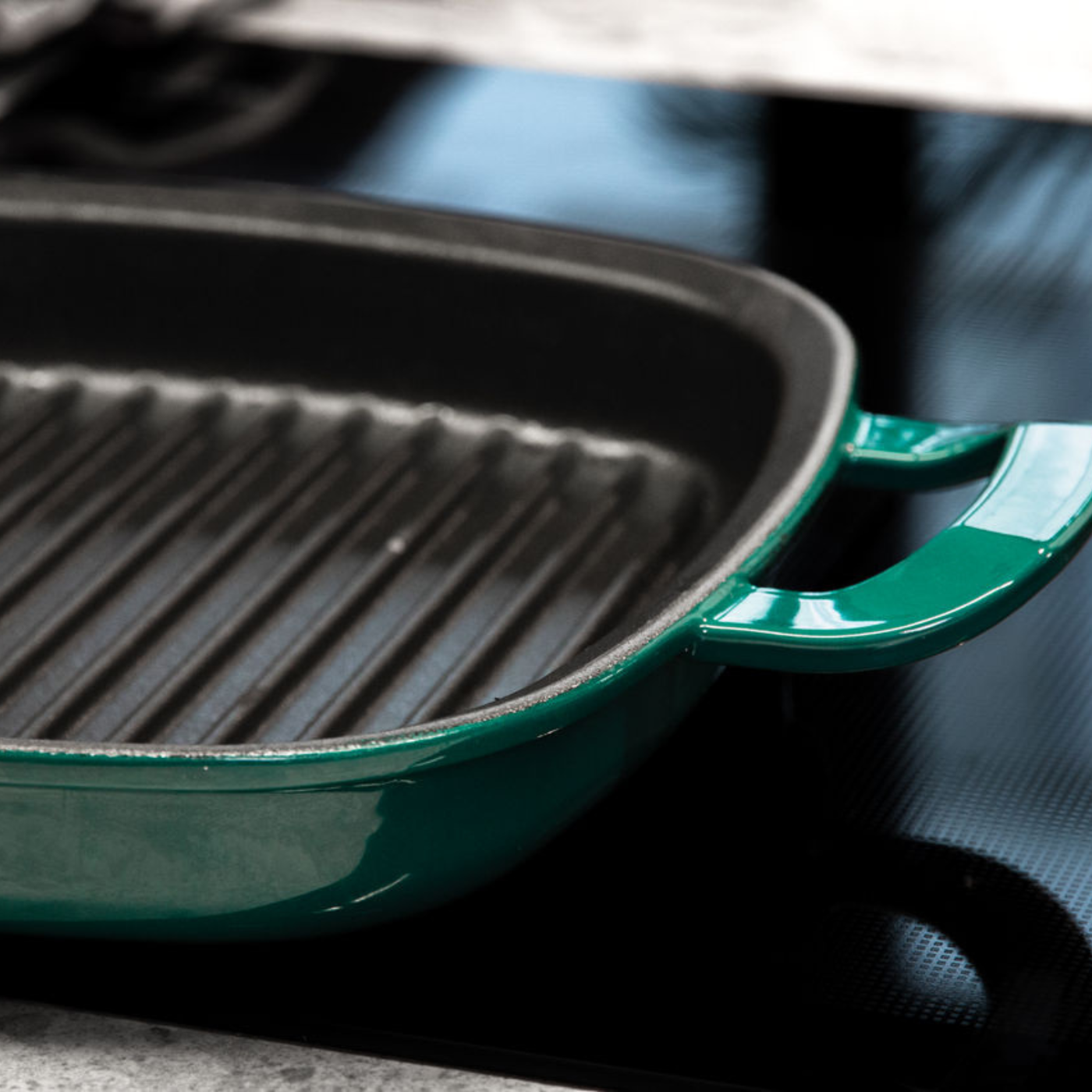
Close-up of a green Fissler cast iron grill pan with precise ridges, presented on a smooth black glass plate.

Step 3:

Then let the cookware cool down slowly.

A person in a denim jacket cleans a high-quality cast iron grill pan on wood, with Fissler's quality and timeless German design nearby.

Step 4:

In the final step, remove the excess grease with a kitchen paper – the dishes are now ready for first use.

Section ID: template--30741712077149__rich_text_PG9GEe

Tipps for proper use

Once you have seasoned the cast iron pans, pots, or roasters, it’s time to start cooking. For the best cooking results and a long lifespan for your cookware, we recommend keeping the following points in mind:

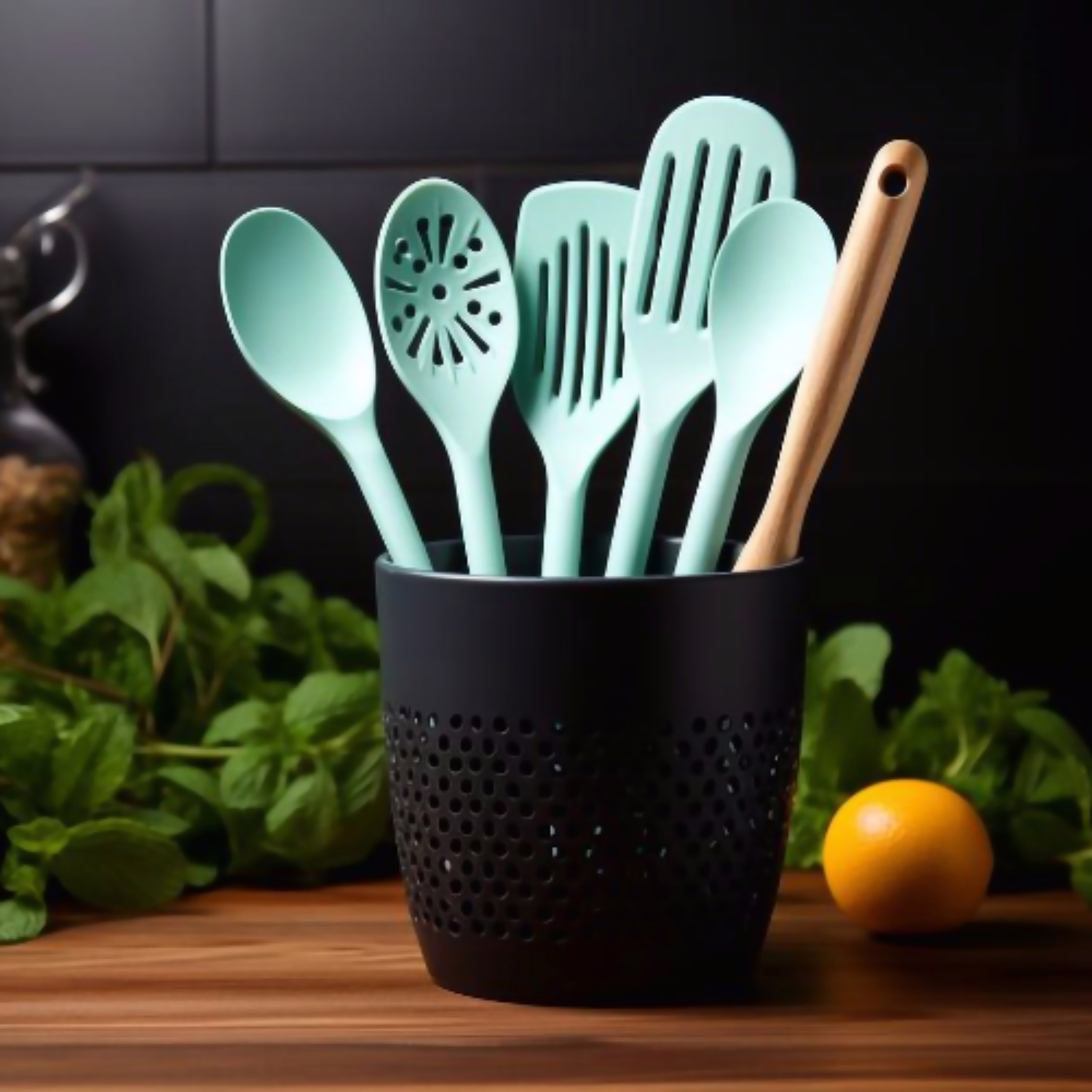
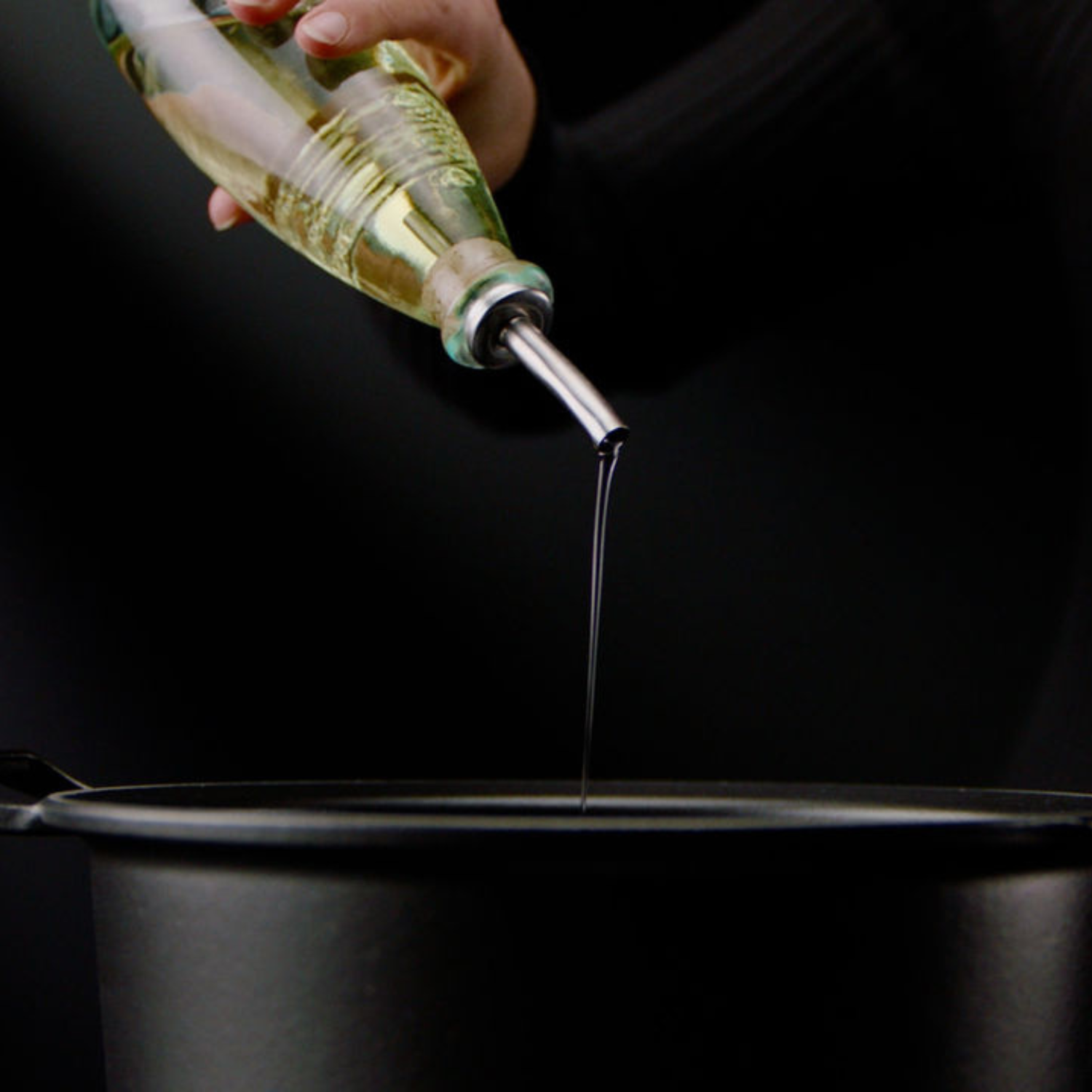
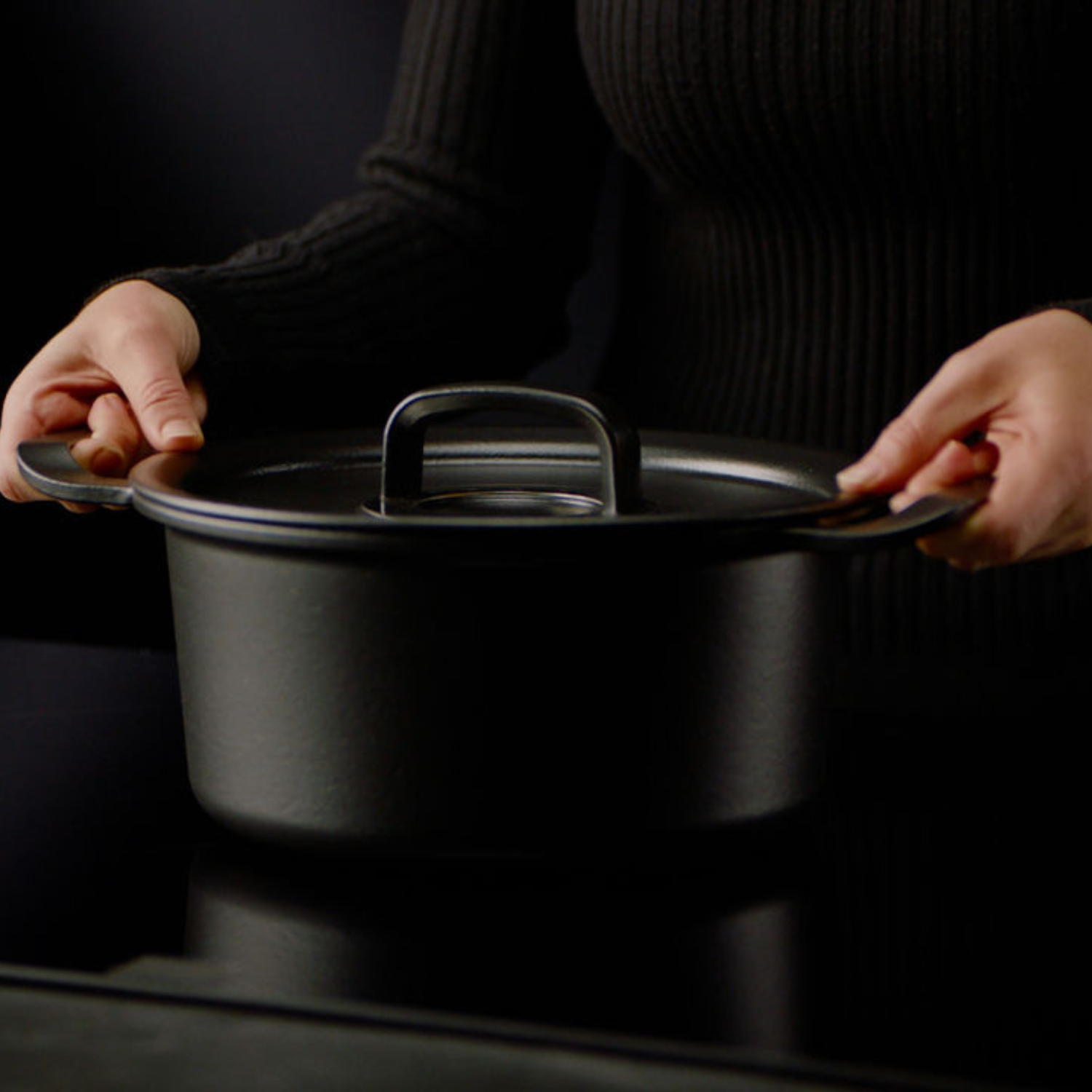
Fissler mint green kitchen utensil set with fresh herbs and lemon in an elegant black holder on wood, presented in a timeless design.A hand pours oil from a glass bottle into a high-quality black Fissler pot, showcasing timeless German design and precise craftsmanship.A person holds a Fissler cast iron pot with lid by its side handles, showcasing timeless German design against a dark background.

Heating

Heat the cast iron cookware slowly over low to medium heat until evenly heated (approximately 5 minutes). Then increase the temperature, using the power boost function only at high temperature.

The right fat

Use fats with a high smoke point, such as clarified butter, refined rapeseed oil, or cooking fats. If the fat starts to smoke, it is too hot and has already exceeded its optimal frying temperature.

Kitchen Accessories

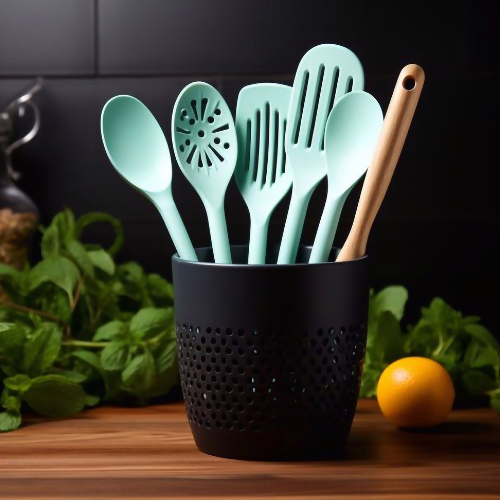
Use Kitchen Accessories made of wood, plastic, or silicone to protect the Cookware. Metal utensils and cutting inside the Cookware can cause scratches and damage.

Cast iron and induction: a perfect combination

One person cooks sliced potatoes in a red Fissler Frying Pan on an induction hob, stirring with our black spatula in a modern kitchen.

Why cast iron is ideal for induction hobs

When cast iron and induction are combined, high stability meets especially high temperatures. As long as it is heated slowly, cast iron can also withstand extreme heat. This cookware works very well with this type of hob, as induction hobs have very little heat loss and cast iron retains heat extremely well.

Why cast iron cookware belongs in every kitchen

Cast iron is more than just cookware - it is a loyal companion in your kitchen. With excellent heat retention, even heat distribution, and lasting quality, cast iron delivers cooking results that bring joy. Whether roasting, braising, or baking - it excels on all hob types and develops its very own character over time. Cast iron is the right choice for reliable enjoyment in your kitchen.