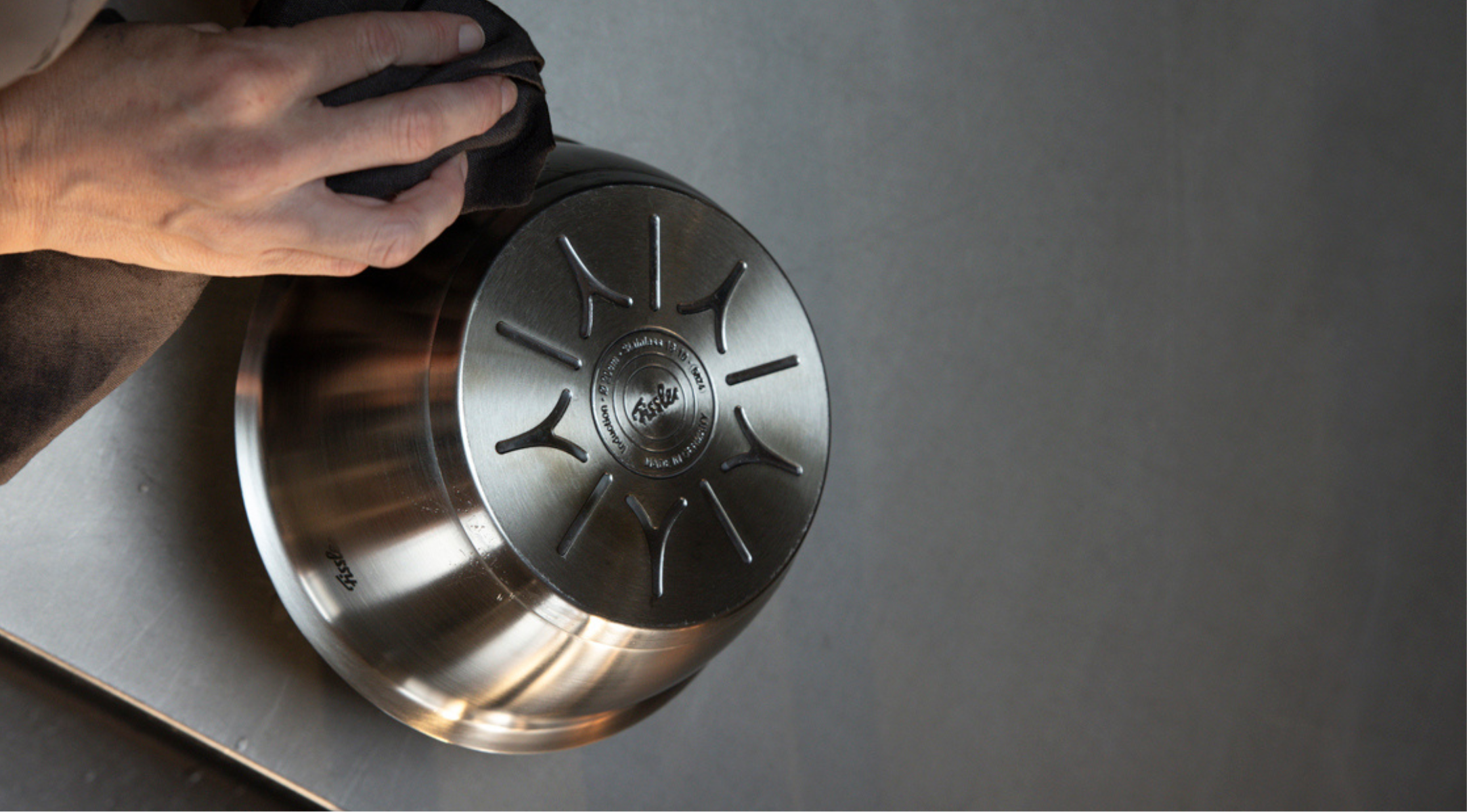
edelstahlpfanne-reinigen

clean stainless steel pan

So stainless steel keeps its special character

When the smell of food slowly fades and calm returns to the kitchen, the often underestimated part of cooking begins: cleaning. Not just as the last step, but as part of the whole.

Because every pan tells its own story over time. Of spontaneous dinners. Of long evenings with friends. Of recipes that only found their character through trial and error. Durable stainless steel becomes a loyal companion in your kitchen — robust, timeless, and made for many years of enjoyment.

With every clean, you remove more than just residue. You preserve the shine of the material. The pleasant feel. The reassuring sense that your pan will work exactly as you expect it to the next time you use it.

Water meets warm steel. Burnt-on spots slowly loosen. The surface starts to shine again. Step by step, use turns back into readiness. For the next dish. For new ideas. For moments that stay with you.

The Daily Routine: How to Clean Your Stainless Steel Pan

Not every mark needs to be removed immediately with force. Stainless steel responds best to patience, warmth, and the right approach. This is precisely the daily routine that keeps your pan beautiful and reliable in the long run.
Before you begin, give the material a brief moment. High-quality stainless steel can react sensitively to drastic temperature changes. What appears robust still benefits from careful handling.

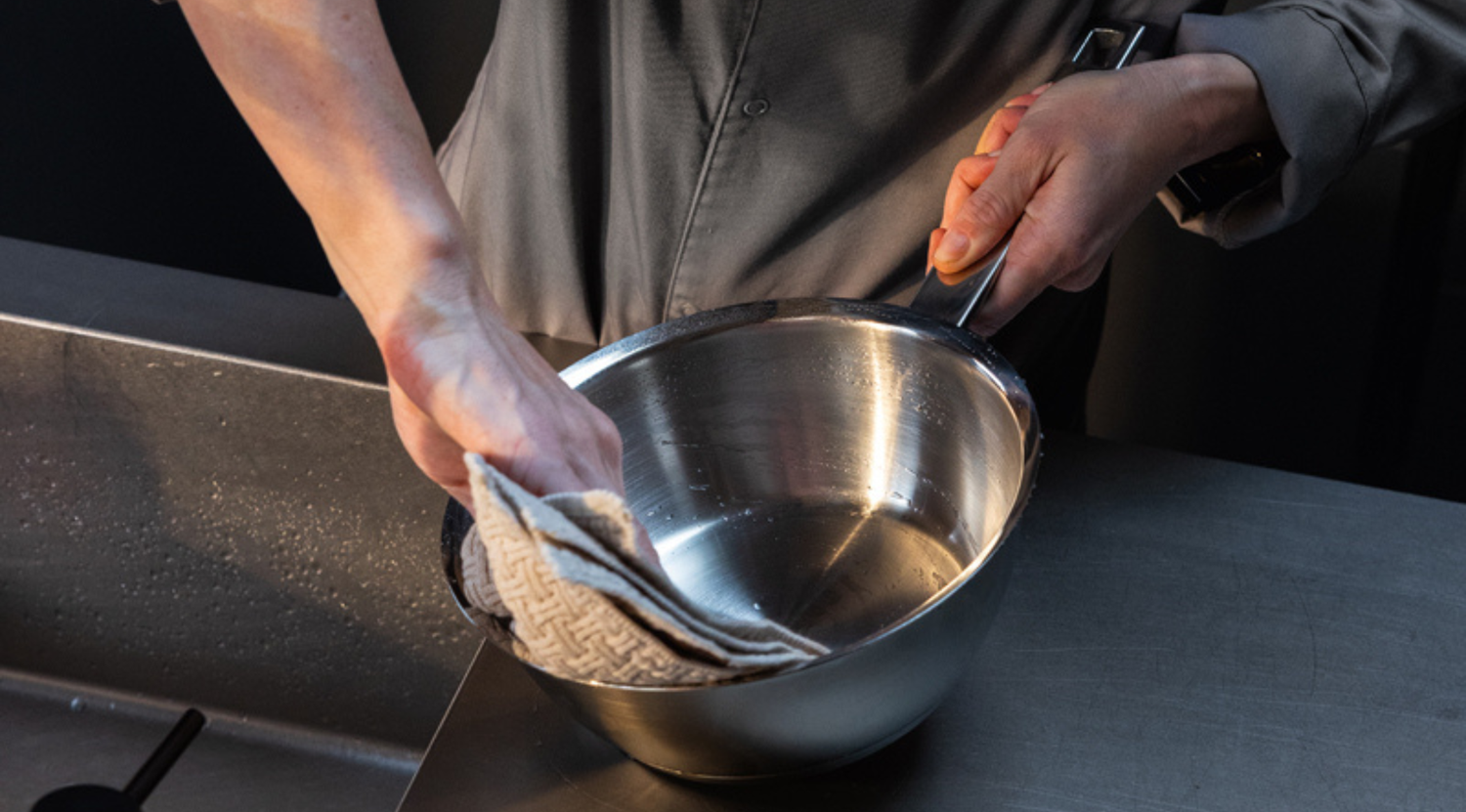
  • Allow to cool first: Give your pan some time before cold water hits the hot surface. This avoids unnecessary stress in the material and maintains the long-term stability of the stainless steel.
  • Gentle instead of aggressive: Warm water, a little mild dish soap, and a soft sponge are usually completely sufficient. Residues often come off easier than you think – without scratching aids or aggressive cleaners.
  • Dry immediately: A soft cloth after rinsing prevents limescale spots and ensures that the surface retains its clear, high-quality shine.

Little effort. Deliberate actions. And a pan that, with every use, remains exactly what it should be: reliable, durable, and ready for whatever comes next.

Cleaning a burnt stainless steel pan: With patience, not pressure

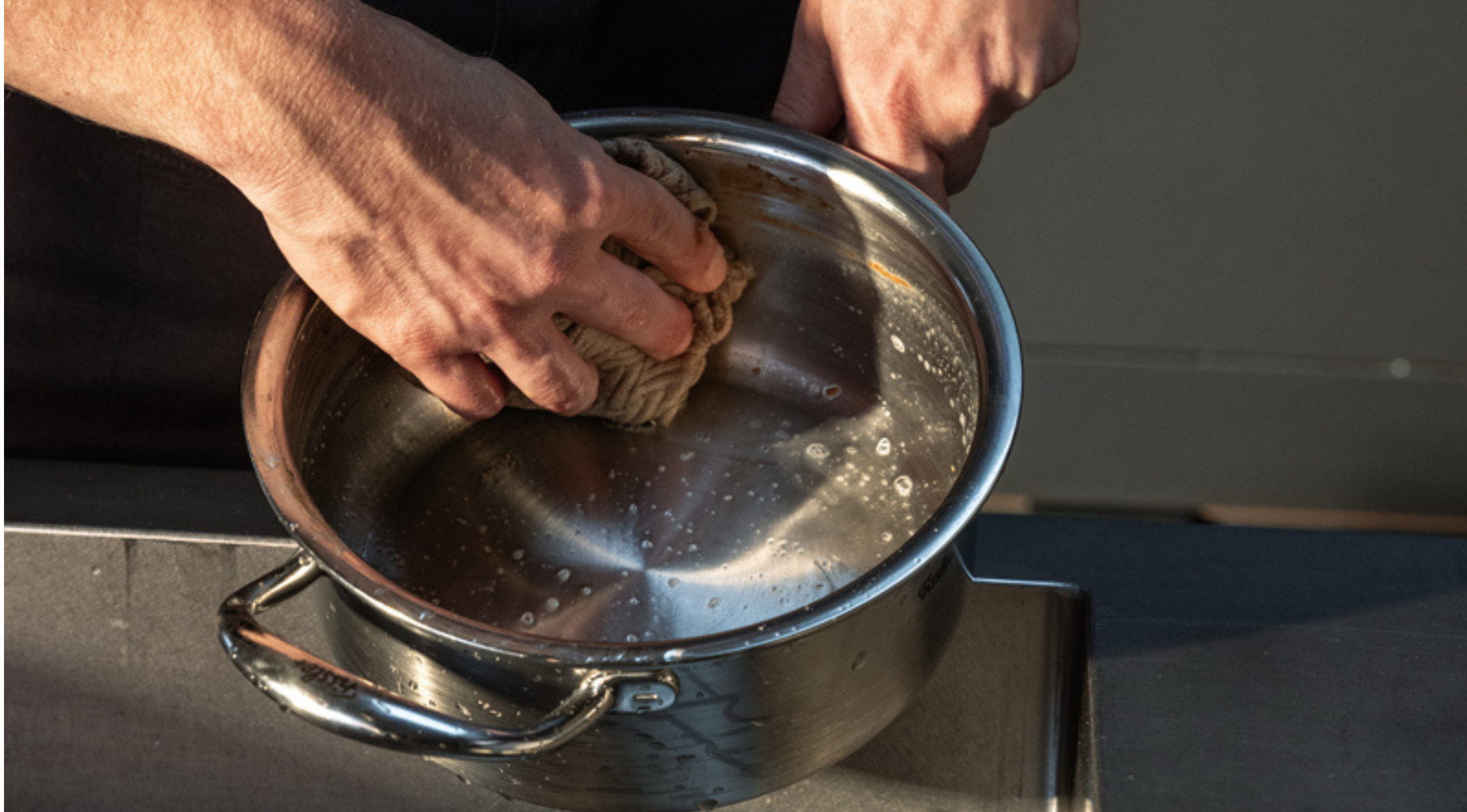
Some traces speak of high heat, long evenings, and particularly intense aromas. If residues have set in, harsh treatment is not needed – but rather the right method. Stainless steel responds best to heat, time, and gentle assistance.

Working with heat

Pour some water with a drop of dish soap into the pan and bring the mixture to a brief boil. The heat often loosens burnt-on residues from the bottom on their own.

Using Natural Helpers

For more stubborn areas, baking soda or baking powder are suitable. With a little water, a gentle paste is formed, which you let sit for a few minutes. Afterwards, encrustations can often be removed without much effort.

Using vinegar strategically

A little vinegar essence in a 3:1 ratio with water helps remove deeper deposits and dull residues. At the same time, the mixture visibly restores the stainless steel's shine.

Tip: For especially gentle cleaning and to preserve its value over the long term, we recommend the stainless steel cleaner and stainless steel care products from Fissler. This keeps the surface well maintained, durable, and retains its premium character for many years to come.

Value retention: Can the stainless steel pan go in the dishwasher?

The short answer: Yes. High-quality stainless steel pans are generally dishwasher-safe. Nevertheless, conscious handling of the material is worthwhile.

  • Technically possible: Stainless steel usually withstands dishwashing cycles without any problems.
  • However, it is stressful in the long run: Cleaning tabs, salt, and high temperatures can attack the surface over time. The fine shine appears duller, and the material loses some of its original radiance.

Our recommendation: If you want to preserve the character and high-quality appearance of your pan in the long term, it is better to clean it by hand. It is gentler – and preserves exactly what makes stainless steel special for years to come. For a long service life, regular care with Fissler stainless steel care is also recommended.

The Aesthetics of Material: Understanding Stains and Discolorations

Stainless steel changes slightly with every use. Heat, water, and minerals leave traces that may seem unfamiliar at first glance. But this is precisely where the vibrancy of the material reveals itself. White spots or rainbow-like shimmers are, in most cases, not a defect in quality – but rather natural reactions to temperature and hard water.

White spots or streaks

Limescale residue from tap water

A soft cloth with a little vinegar or lemon juice usually removes the deposits effortlessly.

Rainbow-like discoloration

Natural reaction of stainless steel to high temperatures.

A little citric acid or a special stainless steel cleaner will make the surface shine again.

Not every change needs to disappear immediately. Many marks occur naturally due to heat, water, and intensive cooking. This is precisely what gives stainless steel its own character over time.

More inspiration & tips from the professional kitchen

Become a master of your stove and discover the versatility of uncoated stainless steel. We'll share our best kitchen secrets, product knowledge, and inspiration for true culinary craftsmanship and your next culinary moment with you.

Blog posts