




- 900 g Chinese cabbage
- 18 g salt
- 125 ml sauerkraut juice
- 192 ml water (190 ml + 2 tbsp)
- 3 g bread spice
- 35 g plum jam
- 280 ml dark beer, reduced to a total of 120 ml
- 6 ml soy sauce
- 2 tbsp sugar
- 150 ml kimchi liquid
- 1 red chili
- 90 g butter, 1 tbsp clarified butter
- 1 tbsp cornstarch
- ½ bunch chives
- 600 g pork tenderloin
- 3–4 tbsp medium-hot mustard
- 3 shallots, finely diced
- 3 tbsp flour
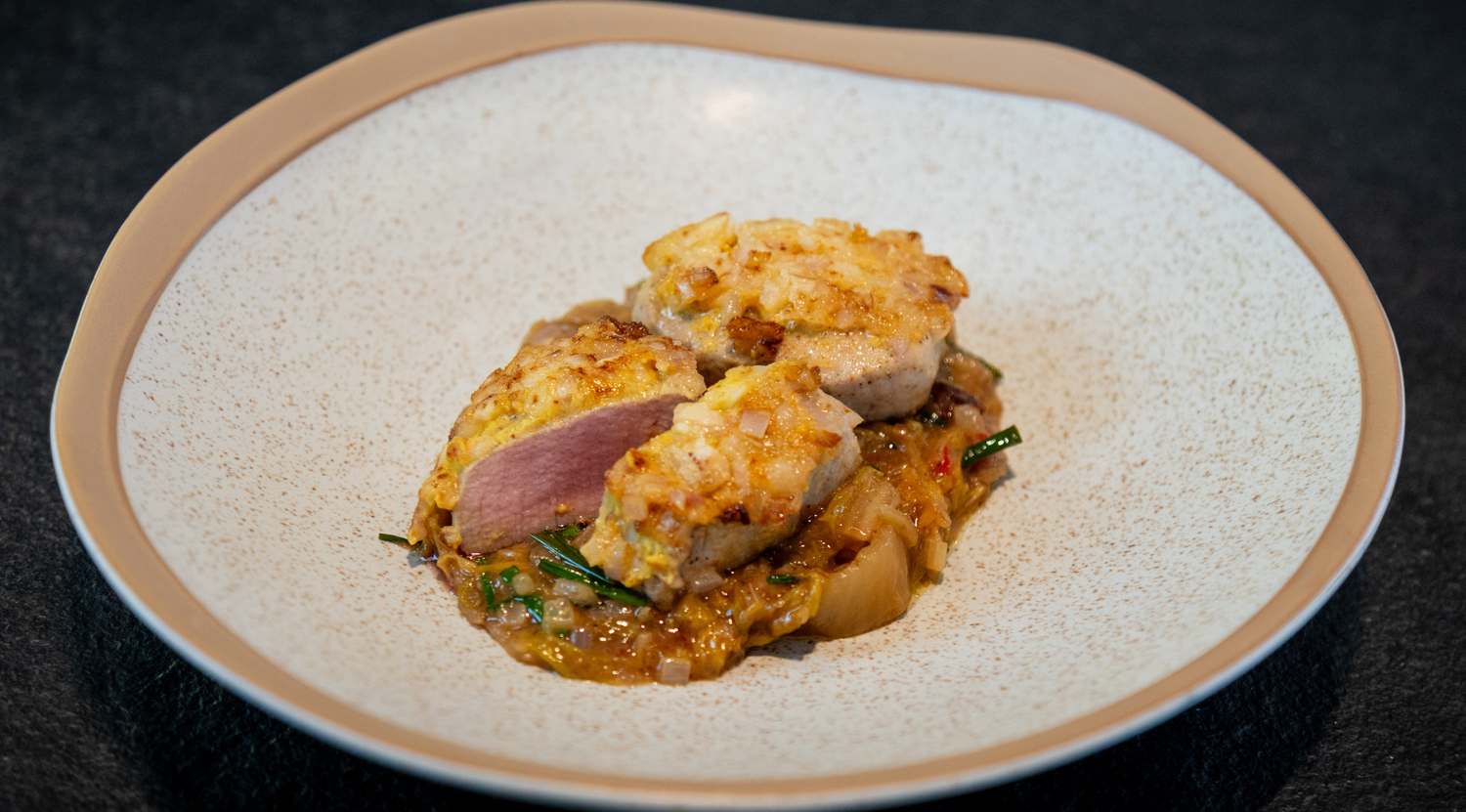
Tender pork fillets Strindberg meet an exceptional Bavarian cabbage kimchi by Michelin-starred chef Alexander Herrmann. The gently caramelized kimchi adds depth to the dish – savory, malty, and with a delicate fruity note. The result is a modern interpretation of a classic: familiar at its core, surprising in the details.
A main course that combines tradition with fresh inspiration – and shows just how exciting cuisine can be when it evolves.

Ingredients needed for 4 people
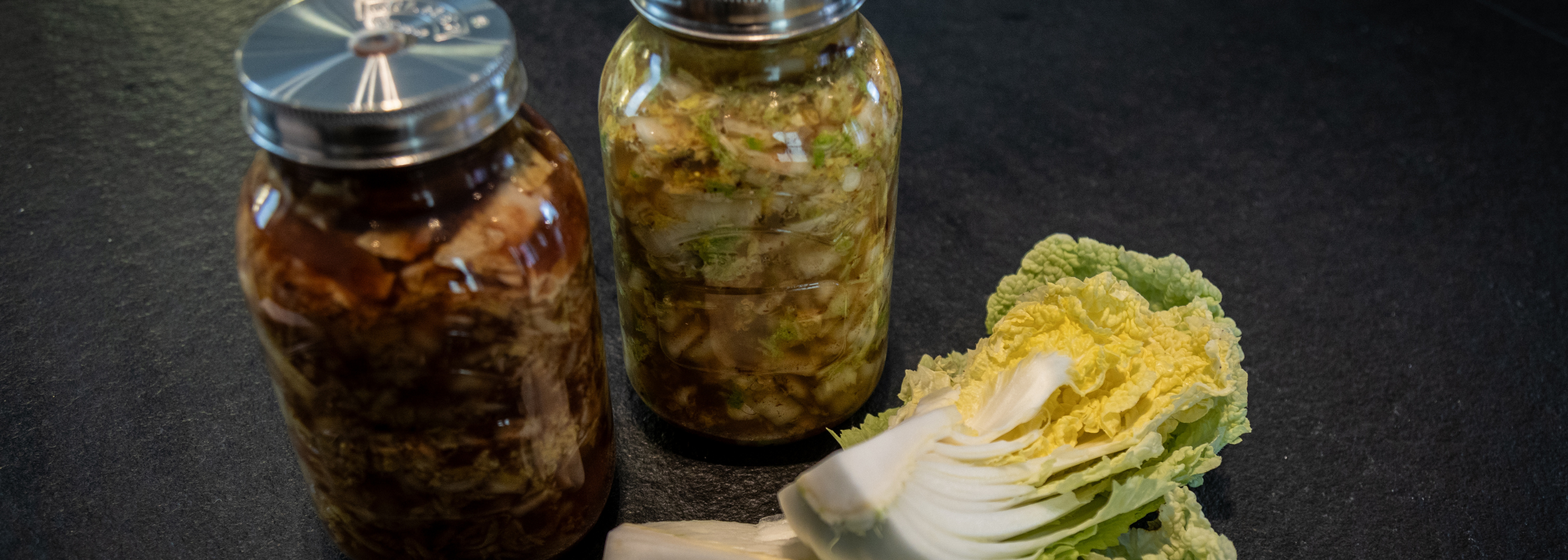
Let's get started with fermenting kimchi
Section ID: template--31570194956637__recipe_reference_wwqxwh
Fermenting Bavarian Cabbage Kimchi
20 min
Total Time
ingredients
| For the Chinese cabbage: | |
| 900 g | Chinese cabbage |
| 18 g | salt (2% of the cabbage weight) |
| For the marinade: | |
| 125 ml | sauerkraut juice |
| 190 ml | water |
| 3 g | bread seasoning |
| 35 g | plum jam |
| 140 ml | dark beer, reduced to 60 ml |
| 3 ml | soy sauce |
Preparation
Step 1 of 7:
Remove the outer leaves from the Chinese cabbage and cut the cabbage lengthwise. Tear the cabbage into quarters by hand, then cut into bite-sized pieces. The leaf parts may remain a little coarser, while the firm stem parts should be cut more finely.
Step 2 of 7:
For the marinade, mix salt, bread seasoning, water, sauerkraut juice, dark beer, plum jam, and soy sauce in a bowl until everything is well combined.
Step 3 of 7:
Add the marinade to the salted cabbage and mix thoroughly.
Step 4 of 7:
Pour the mixture into a clean preserving jar or fermentation jar and press down lightly so that as little air as possible is trapped.
Step 5 of 7:
IMPORTANT: The whole thing must be weighted down with a fermentation weight (or a stone, etc.) to ensure the cabbage is always kept below the surface of the liquid.
Step 6 of 7:
Seal the jar and let it ferment at room temperature for about 7 days.
Step 7 of 7:
Taste the kimchi after a week. Once the desired level of fermentation is reached, store it in the refrigerator. There, fermentation slows down significantly.
Your kimchi moment with Alexander Herrmann
In the video, Alexander shows you step by step how to ferment kimchi yourself – and reinterpret it in Bavarian cabbage style.
From the right prep to the finished brine: here, you’ll learn the basics and get a feel for how simple ingredients can become something special. Enjoy trying it out and making it yourself.
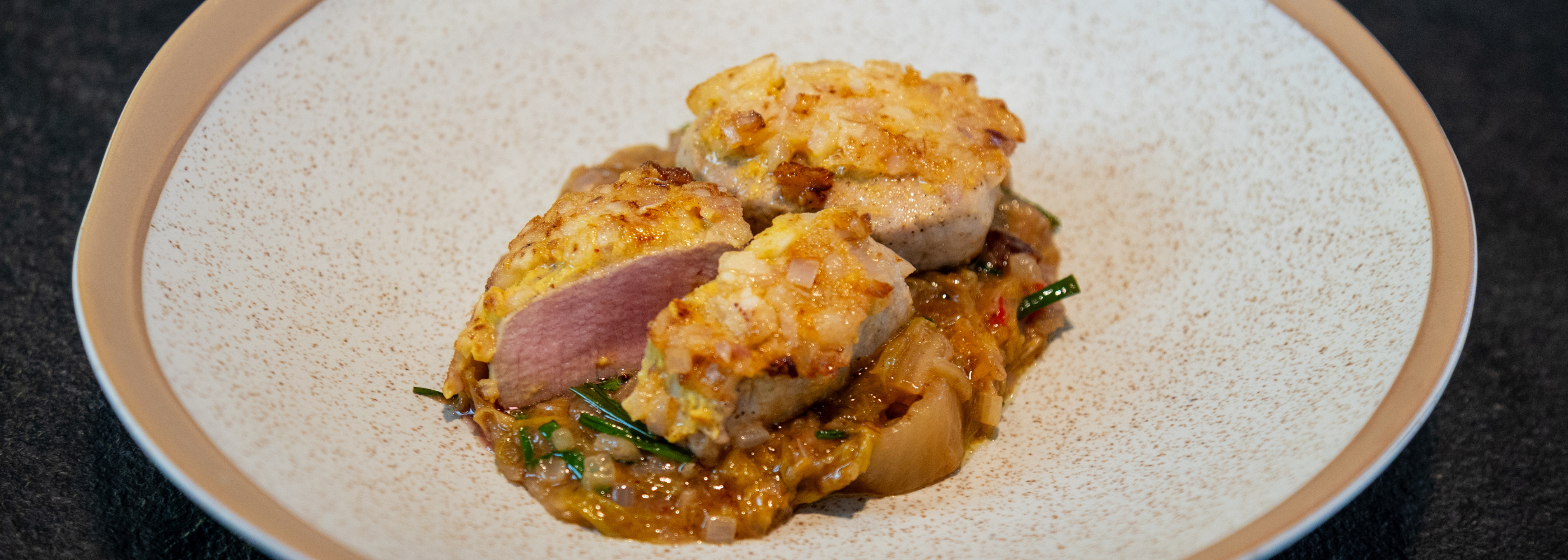
Let's continue with preparing the dish
Section ID: template--31570194956637__recipe_reference_BDWnL9
Pork Tenderloin Strindberg with Kimchi
45 min
Total Time
25 min
Cooking Time
20 min
Preperation Time
Ingredients
| For Bavarian kimchi cabbage: | |
| 500 g | Bavarian kimchi (drained) |
| 2 tbsp | sugar |
| 150 ml | kimchi brine |
| 1 | red chili |
| 40 g | butter |
| 1 tbsp | cornstarch |
| 2 tbsp | water |
| ½ bunch | chives |
| 140 ml | dark beer, reduced to 60 ml (alternatively: non-alcoholic malt beer) |
| 3 ml | soy sauce |
| For the Strindberg pork tenderloin: | |
| 600 g | pork tenderloin |
| 3-4 tbsp | medium-hot mustard |
| 3 | shallots, finely diced |
| 3 tbsp | flour |
| 1 tbsp | clarified butter |
| 50 g | butter |
| salt and pepper |
Preparation
Step 1 of 8:
Drain the fermented kimchi and reserve the brine.
Step 2 of 8:
Let the sugar caramelize lightly in a saucepan or frying pan. Deglaze with a little kimchi brine and add the kimchi. Finely chop the chili and stir it in. Let the kimchi simmer over medium heat for a few minutes, then add the butter and let it melt completely.
Step 3 of 8:
Stir the cornflour smooth with water, add to the kimchi, and briefly bring to the boil until it thickens slightly. Finely slice the chives (into about 1-1.5 cm rings) and gently fold in.
Step 4 of 8:
Cut the pork tenderloin into medallions about 3 cm thick and flatten them slightly. Season both sides with salt and pepper.
Step 5 of 8:
Brush the tops of the medallions with mustard. Press the diced shallots into the mustard layer. Gently press the mustard-onion side into the flour.
Step 6 of 8:
Heat clarified butter in a pan. Place the medallions in the pan with the floured onion side facing down and press down gently. Fry slowly over medium heat until the diced shallots are golden brown. Then turn them over.
Step 7 of 8:
Add the butter, let it foam, and finish cooking the medallions in it. Baste the medallions several times with the foaming butter (arroser). Then remove the cooked medallions from the pan.
Step 8 of 8:
Briefly sauté the remaining shallots in the same pan, season with salt and half a spoonful of mustard, and add to the kimchi.
Alexander Herrmann Shows How It's Done
Let Alexander Herrmann guide you through the preparation.
With valuable tips from the professional kitchen and your own intuition, you’ll create a dish that impresses step by step: juicy pork tenderloin, served with aromatic kimchi.
That’s how good ingredients become something special – entirely at your own pace.
RECIPEs
More recipe ideas
Shop settings
Country
Language
Select country
Select language
Welcome to Fissler
We found a market that suits you.
There you will find the products, prices and information that match your location.
OTHER MARKETS